Dossier No. 10 · England, 16th c. sporting estates
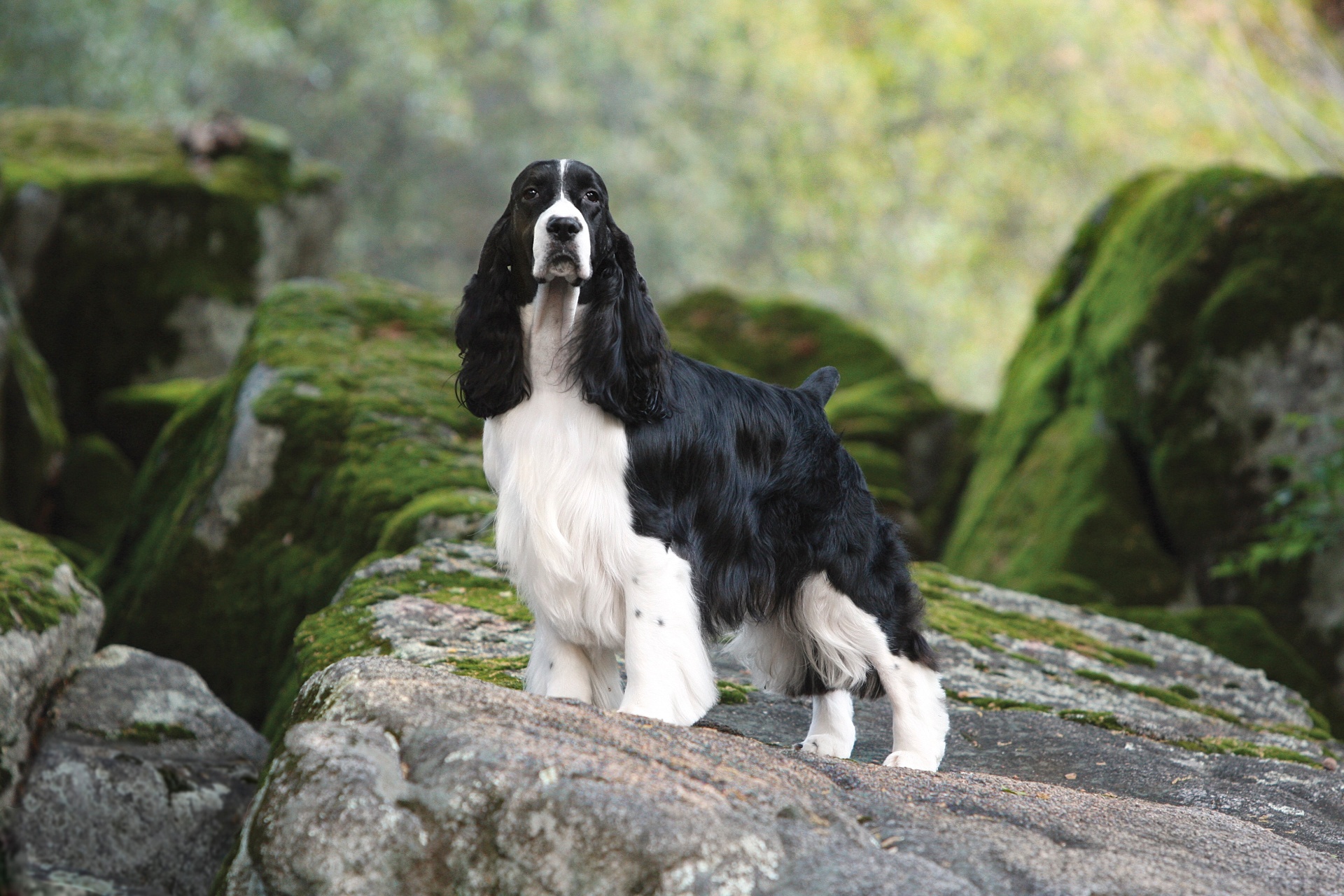
English Springer Spaniel
Country houses and active families who appreciate a spirited, elegant sporting companion.
- Stature
- Medium
- Coat
- Silken feathering — liver & white, black & white, or tri-color
- Temperament
- Enthusiastic, biddable, tirelessly cheerful
- Origin
- England, 16th c. sporting estates
I
History
The oldest of the sporting spaniels, the Springer takes its name from its task — springing game from cover for the net or the gun. Prized by English gentry since the 16th century, the breed split formally from the Cocker in the 19th century by size alone: above 25 pounds, a Springer; below, a Cocker. They have worked every royal estate from Sandringham to Balmoral.
II
Personality
Enthusiastic without being frantic, biddable without being obsequious. They are the cheerful diplomat of the sporting world — adaptable, eager, and possessed of a tail-wagging optimism that survives even the rainiest shoot. They require occupation; left idle, they become inventors of mischief.
III
To Live With One
Country houses, weekend cottages, and active families who do not regard a muddy boot as a calamity. They are tactile, vocal, and will follow you from room to room with a feathered tail that clears low tables. Daily exercise is non-negotiable; so is a sense of humour.
IV
Notable Companions
The British Royal Family has kept Springers on the Sandringham estate, where they serve as both working gundogs and family companions. King George V's kennels were famous for them. They remain the private passion of English sporting families and a growing circle of American estate owners who value tradition and temperament in equal measure.