Dossier No. 21 · Wales, 17th c. sporting estates
Welsh Springer Spaniel
Country houses and shooting families who appreciate a quieter, one-family sporting spaniel.
- Stature
- Medium
- Coat
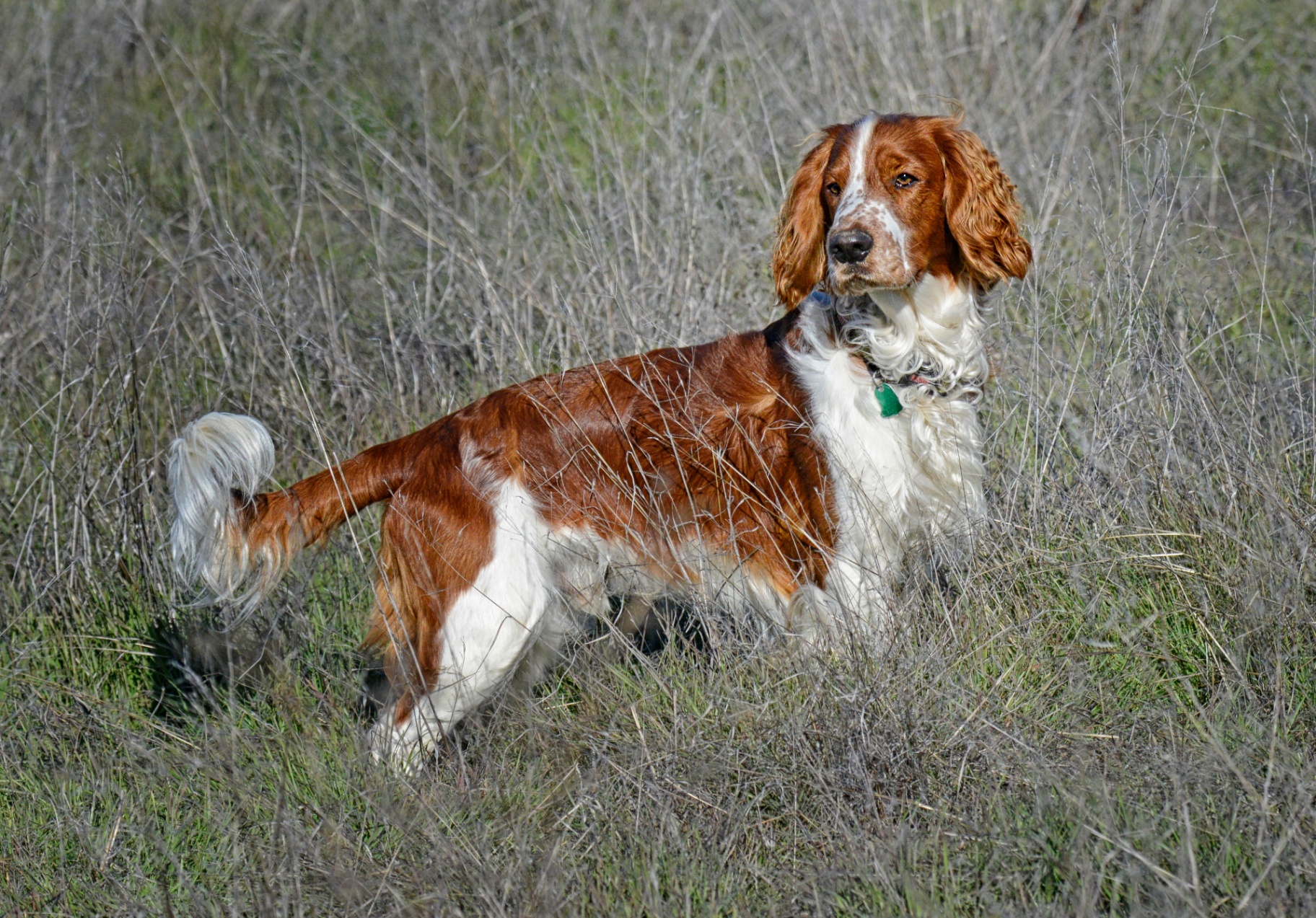
- Silken red and white, feathered ears and legs
- Temperament
- Reserved with strangers, warmly devoted at home
- Origin
- Wales, 17th c. sporting estates
I
History
The older, quieter cousin of the English Springer, the Welsh Springer was worked on the sporting estates of Wales from at least the 17th century — a red-and-white spaniel of great antiquity, distinct from the English line and prized for its stamina in rough country. The Kennel Club recognised the breed as separate from the English Springer in 1902; the standard has scarcely changed since.
II
Personality
Reserved with strangers, warmly devoted at home, and possessed of a quieter, more thoughtful temperament than its English cousin. They are one-family dogs in the truest sense — attaching deeply to a small circle and working the field with steady, unhurried enthusiasm.
III
To Live With One
Country houses, weekend cottages, and shooting families who appreciate a spaniel that thinks before it springs. They require daily exercise and a job, but they are calmer in the drawing room than the English Springer — a good choice for households that want the working spaniel temperament in a slightly quieter package.
IV
Notable Companions
Kept for centuries by the Welsh sporting gentry and by a devoted circle of English and American estate owners who prize the breed's steadiness and its striking red-and-white coat. The Welsh Springer has never been a fashionable dog and its owners tend to prefer it that way — a spaniel for those who value tradition over trend.